Experts
— Expert —
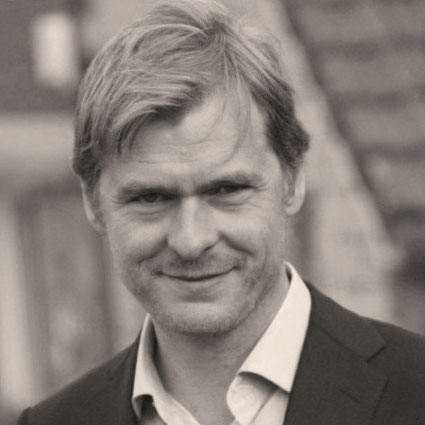
Frédéric Jacquemin
holds a Master’s degree in Art History and Archaeology from the Université Catholique de Louvain and a Master’s degree in Business Administration from the Université de Bruxelles and Solvay Business School. Before being appointed Director of the Marcel Hicter Foundation for Cultural Democracy in 2021, Frédéric was CEO of Africalia, the Belgian agency for cultural cooperation with Africa, from 2013 to 2021. He coordinated the Cultural Observatory for the Secretariat of the African-Caribbean-Pacific Group of States, where in this capacity he conducted studies on creative industries and cultural policies in ACP countries from 2009 to 2012. As an independent expert from 2007 to 2009, he designed cultural cooperation programmes and training courses in cultural business management in sub-Saharan Africa for organizations such as the Belgian Technical Cooperation and the Organisation Internationale de la Francophonie. From 1998 to 2006, he led projects on the economic and political stakes of culture, both in Europe and in sub-Saharan AfricA. Director-producer of audiovisual documentaries in Europe (Le Troisième Paradis, 2003) and Africa (Est-ce que ça va? 2007), exhibition curator and author on cultural issues, he is particularly interested in the critical function of contemporary creation and the challenges it faces.
— Expert —
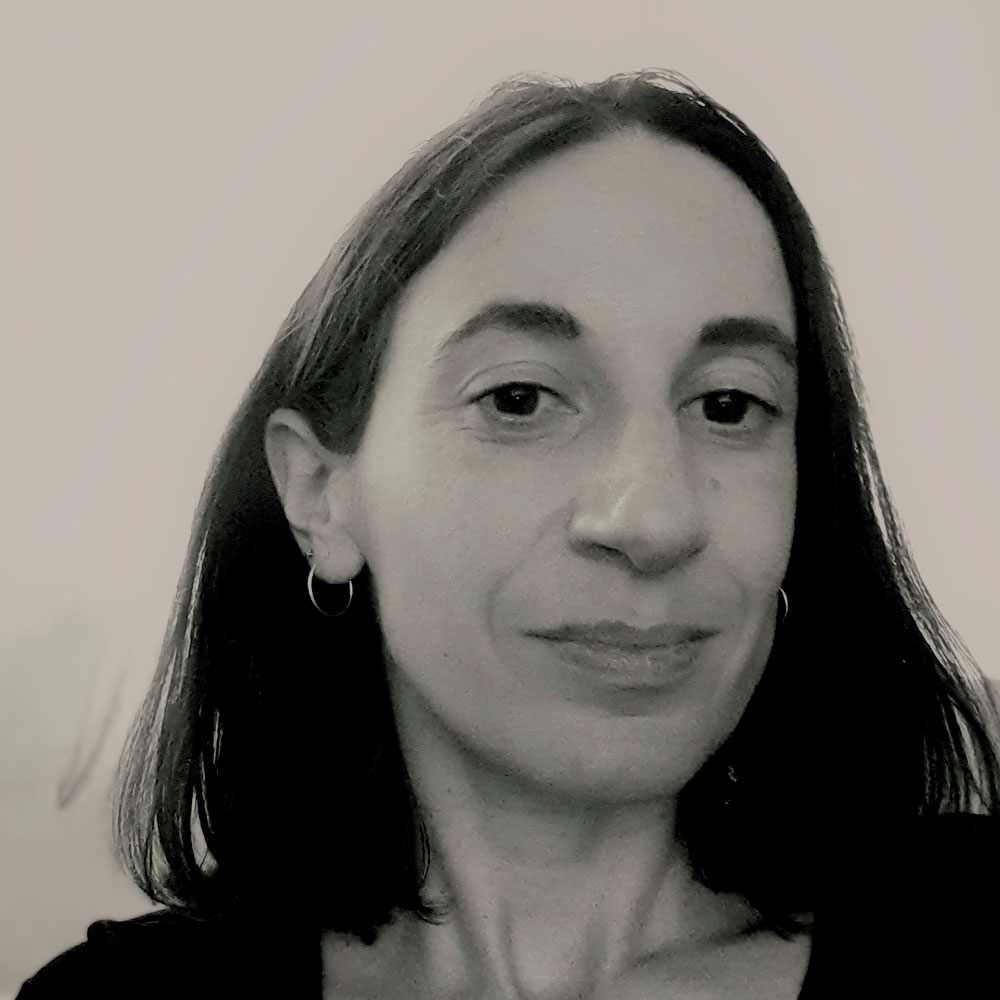
Serena Pacchiani
currently a freelance expert in communications strategy, policy research, and transnational cooperation, focusing on culture, heritage, and the creative economy. She holds a PhD in Art History and Architecture from the University of Florence and Université Libre de Bruxelles, for which her thesis received an Academic prize in 2021. She further honed her expertise with a Master’s in Cultural Management from a Business School in Brussels. With extensive experience spanning local, regional, and international levels, she has collaborated with numerous cultural institutions. As an accredited journalist, she regularly contributes to publications and specialized magazines and participates in European Commission-sponsored training programs. Her multidisciplinary background and hands-on experience position her at the intersection of academic research, cultural management, and policy development, enabling her to provide unique insights and strategies in her field.
— Expert —
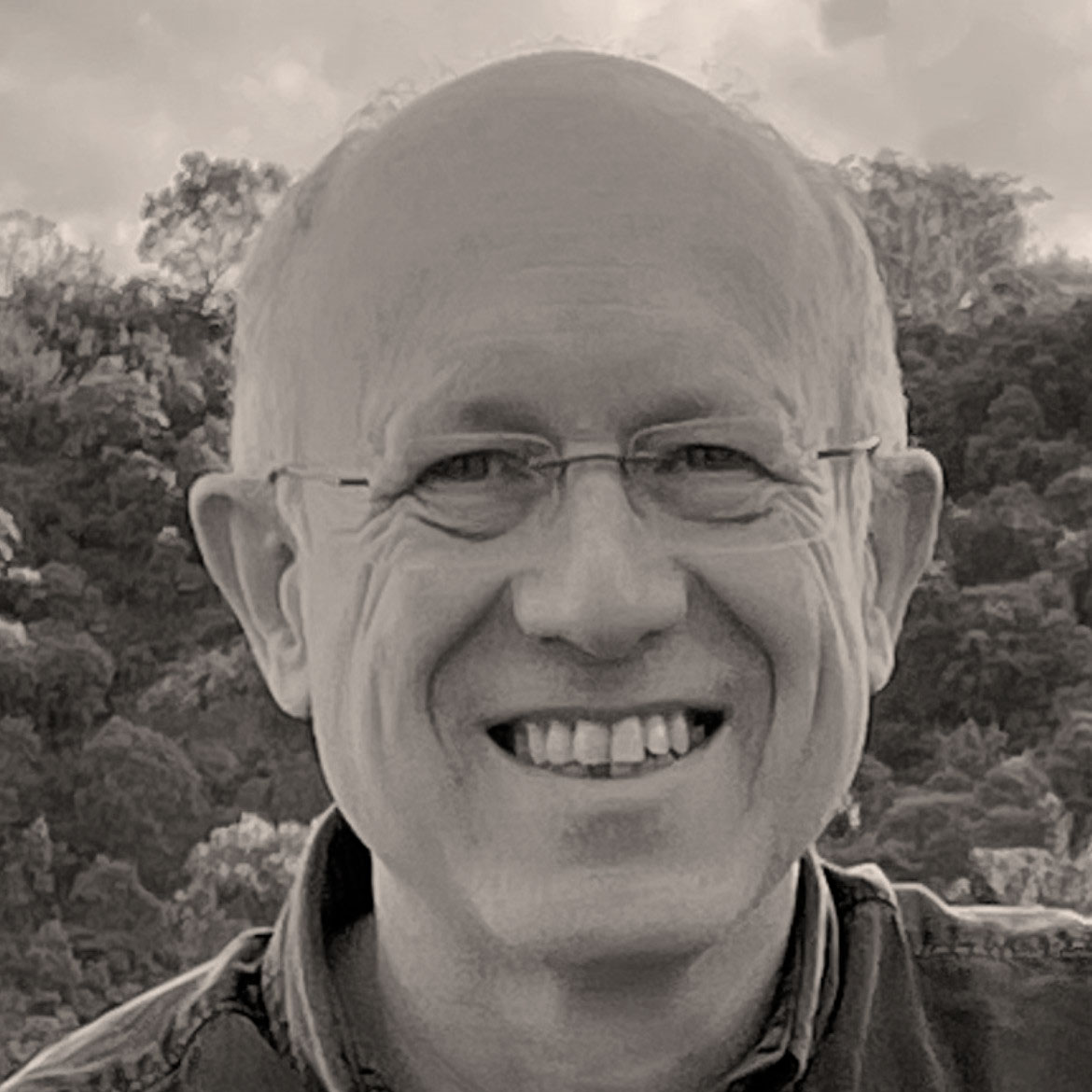
Lluis Bonet
Professor of economics and director of the Cultural Management program at the University of Barcelona. Specialized in cultural economics, cultural policies and arts management, he has been research fellow at MIT and the University of Montpelier and guest lecturer in more than 50 different countries. Winner of the 2002 CAC Research Award and 2023 Encatc Outstanding Contribution Award, he has been president of the jury of the Cultural Policy Research Award and the European network ENCATC, and board member of many academic and cultural associations and journals. He is an active participant in many European funded projects (Creative Europe, Erasmus+, Horizon). Among his latest co-authored publications are: Why is managerial shared leadership in creative organizations a more resilient, transparent, open, and generous constellation? A case analysis approach (2023), Measuring the Social Dimension of Culture: Handbook (2023), or Government Matching of Cultural Crowdfunding: An exploratory comparative analysis of the Spanish and Swedish cases (2023), Legitimating cultural policy after the 2008 crisis: learnings from France, the UK, Spain and Greece (2022), La innovación en la gestión de la cultura. Reflexiones y experiencias (2021), La politique culturelle à l’épreuve de l’agence. Essai de combinaison d’approche principal agent et stakeholder (2020), Cultural policies in Europe. A participation turn? (2020).
— Expert —
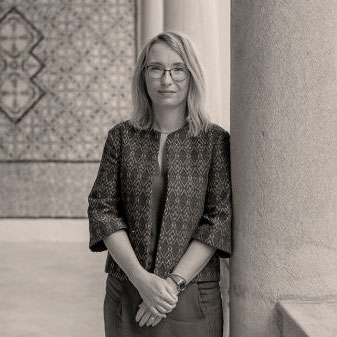
Dominika Kasprowicz
academic researcher and international projects’ manager, PhD (Degree) in Political Science (2010), Associate Professor at the Jagiellonian University (Institute of Journalism, Media and Social Communication), holder of the European Diploma in Cultural Project Management, graduee of the IVLP programme, since 2016 CEO of the Villa Decius, Poland – cultural institution, residency for artists and scholars at risk, awarded with a title of Ambassador of Multiculralism by a City of Krakow (2023). Member of several executive boards and expert panels i.e. of “SO-CLOSE Enhancing Social Cohesion through Sharing the Cultural Heritage of Forced Migrations” H2020 project, member of the Interdisciplinary Team of OPEN KRAKOW Programme untill 2023), UNAEuropa Heritage Lab. Initiator of numerous programmes adressing the needs of refugees and migrants, minorities in Poland, coordinator of the ICORN Programme in Krakow. Her research area includes cultural diplomacy and management, political communication, populism and social innovations in politics. Choice of co-authored publications: “Communicating Populism. Comparing Actor Perceptions, Media Coverage, and Effects on Citizens in Europe”, Routledge, 2019, “Politics, Society and the Economy in Contemporary Poland. An Introduction”, Scholar 2016.
— Expert —
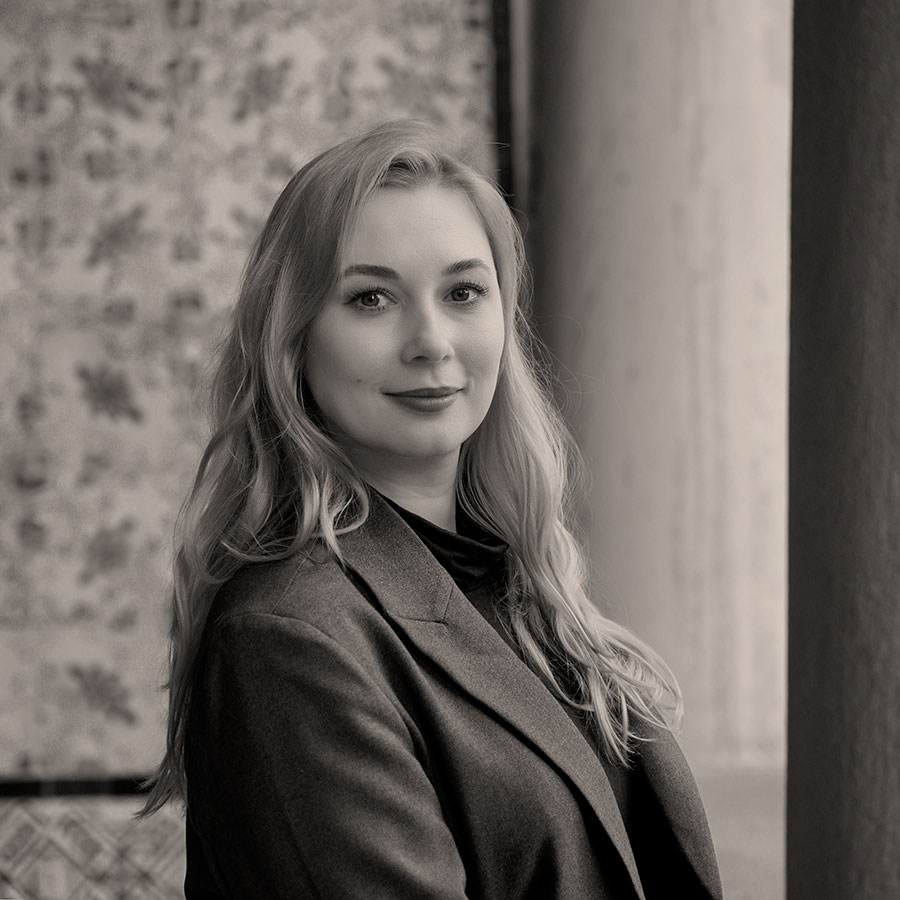
Aleksandra Szymańska-Niekłań
Aleksandra Szymańska-Niekłań is a graduate of Jagiellonian University, where she completed her studies in Journalism and Social Communication. She also holds an engineering degree in Geodesy and Cartography from the AGH University of Science and Technology. Since 2017, she has been affiliated with the Villa Decius, where she serves as the Head of the International Cooperation Office. She specializes in implementing educational, cultural, and international projects, such as the longest-running intellectual exchange project in the region – Visegrad Summer School, which annually gathers participants from numerous Central and Eastern European countries. Aleksandra also has extensive experience in managing international projects under the Erasmus+ program, including initiatives aimed at enhancing the competencies of adult education staff, with a focus on culture as a space for education. She has been responsible for organizing international exhibitions, artistic residencies, and cultural events targeting local communities, including expatriates living in Krakow. Her work encompasses European-scale projects, emphasizing cultural heritage preservation, intercultural cooperation, and combating hate speech. Her competencies include team management, securing funding from various sources, and strategic planning of long-term cultural and educational initiatives.
— Expert —
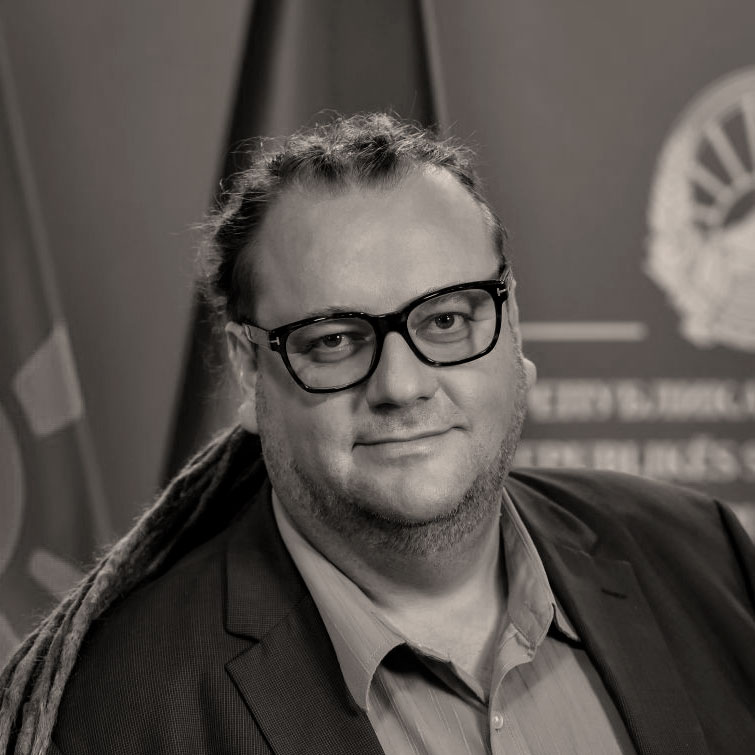
Robert Alagjozovski
a writer, translator, researcher, and literary critic with an M.A. in Comparative Literature. Since 2017, he has been involved with the Government of the Republic of North Macedonia, serving as Minister of Culture for one year and later as the National Coordinator for Interculturalism, One Society, the Development of Culture, and Interministerial Cooperation. Since 2010, he has been the owner and editor of Goten Publishing, alongside numerous freelance projects both nationally and internationally. He has been part of the pedagogical team and later the board of the European Diploma in Cultural Project Management since 2008, contributing to over 100 training events, seminars, and conferences focused on facilitation, project management, interculturalism, and diversity management. Among his notable past achievements are the 2003-2007 NGO Kontrapunkt project “Confluent Margins,” which aimed at cultural decentralization and alleviating interethnic tensions in the post-conflict period by fostering cultural cooperation and exchange in both ethnically homogeneous and mixed areas. He also participated in the Brussels-based Oracle-European Network of Cultural Project Managers project “Sustainable Development in a Diverse World,” which explored new forms of citizenship and cultural identities (2005–2010). Additionally, he was involved in the NGO Esperanza regional project “From Diaspora to Diversity” (2015–2017), focusing on regional and European practices and research studies on diversity management, diaspora, nomadism, and mobility.
Organizations
— Organization—
Association Marcel Hicter
The Association Marcel Hicter, founded in 1980 and supported by the Fédération Wallonie-Bruxelles, is a non-profit organization dedicated to promoting cultural democracy in Belgium, Europe, and internationally. Through networking, innovative actions, and knowledge sharing, the Association raises public awareness and empowers citizens by offering interdisciplinary cultural training programs. A core focus since its inception has been training professionals in cultural management, equipping them with the skills to adapt to evolving cultural practices and meet new professional demands. These programs help build bridges between cultural operators and the broader European cultural landscape. The Association Marcel Hicter also promotes culture among decision-makers and fosters cultural co-operation enabling partners to undertake common projects taking into account all specificities. As a provider of life-long learning services, the Association Hicter plays the interface between field operators and cultural decision-makers. It informs and monitors cultural managers. The Association sometimes advises public cultural authorities. It plays a role in analysing actual and future policies and actions through action-research programs produced in partnership with European cultural organizations. (Belgium, Brussels)
— Organization—
University of Barcelona
The University of Barcelona (UB) is a public research university founded in 1450, located in Barcelona, Catalonia. With a student body of 76,000, it is ranked as the best university in Spain by both US News and World Report and Times Higher Education. The Cultural Management Program, established in 1989, is one of the most recognized and long-standing programs in Europe. It is built on three main pillars:
a) An education and training program that includes a PhD, a Master’s in Cultural Management, and several postgraduate courses in International Cultural Cooperation and Performing Arts and Festival Production and Management. Over the past 35 years, 2,000 professionals from 75 countries have participated in these programs as professors and students.
b) A research program focused on cultural management and policies, bridging economics, anthropology, political science, and law. The program conducts both academic and applied research to support cultural institutions, enterprises, and projects, with extensive experience in local, national, and international research initiatives.
c) A professional community program that hosts conferences, debates, and workshops, providing a platform for cultural projects and networks.
— Organization—
IKWD
The Villa Decius Institute for Culture, founded in 2019 as a municipal cultural institution in Krakow, is based in a historic Renaissance palace. With the motto “Meeting Place,” the Institute promotes dialogue, toleration, openness, and cooperation through a variety of cultural programs. Continuing 28 years of cultural activity of Villa Decius Association, it engages Krakow’s residents in preserving the city’s heritage while blending tradition with modernity. The Institute hosts international projects, educational programs, and artistic events such as exhibitions, debates, and concerts. It also runs residency programs for artists, including those seeking refuge, fostering dialogue-oriented artistic activities to enhance Krakow’s multiculturalism. The main focus areas are: European cultural heritage, intercultural dialogue, artistic residencies, education for children. Collaborating with global institutions, Villa Decius supports Krakow’s membership in networks like UNESCO’s Creative Cities Network, ICORN, OWHC, and Europa Nostra. (Krakow, Poland)
— Organization—
Goten
Goten Publishing, founded in 2010 in Skopje, has been active in the fields of publishing and culture since the mid-1990s. Its team has worked with magazines, publishing houses, and NGOs, organizing cultural projects, public debates, and artistic events. The publisher focuses on two main areas: supporting young Macedonian authors and expanding its network of translators. Goten collaborates with experienced and new translators, helping them secure residencies and enhance their skills. Goten partners with the Association of Independent Writers of Macedonia and the Traduki network, organizing the “Absolute Modern” literary residency in Skopje. The publisher is also involved in the national program for the Leipzig Book Fair. Goten’s work is supported by various cultural organizations, including Macedonia’s Ministry of Culture, Traduki, and the TEDA translation program. Currently, Goten Publishing leads two EU Creative Europe projects: “Deeper Europe, Wider Reach” and “Intercultural Authors Going Digital and Beyond.” Its mission is to connect Macedonian literature with the global literary scene by translating international works and promoting Macedonian authors. The vision centers on cultural diversity, communication between cultures, and the exchange of literary experiences. Key objectives include increasing diversity in authors and enhancing digital promotion and distribution. (Skopje, North Macedonia)